Five people, one project, five different memories.
That’s what happens when a team works with Claude, ChatGPT, Gemini, or Grok today. Everyone builds their own history with the model. Ask two people on the same account to draft the same follow-up email and you get two different tones, two different sets of facts, sometimes two different mistakes. The models don’t know about each other. Neither do the people using them.
We’re building IntoChat to fix three problems like this one. Here’s what they are.
One team, five different memories

The models coming out of Anthropic, OpenAI, Google, and xAI right now are strong. Ask any of them to write, research, or plan and the result is consistent and good.
The problem is sharing it. Each person on a team runs their own chat, with their own memory. ChatGPT’s memory feature helps one person, not five. Nobody’s assistant knows what a colleague already found out, decided, or wrote last week.
Add company guidelines to the list: a design system, a house style, a set of internal tools most businesses never get to use because building them takes real engineering skill. An IT team could write a set of reusable instructions, draft an email this way, produce an article that way, but almost no company has the setup to do it.
IntoChat combines memory at two levels: what the organization knows, and what each person knows, plus a shared set of skills anyone on the team can run. We’re not sharing how yet. It’s on our roadmap and still being built. But that’s the first problem we’re solving.
Powerful tools, locked behind a command line
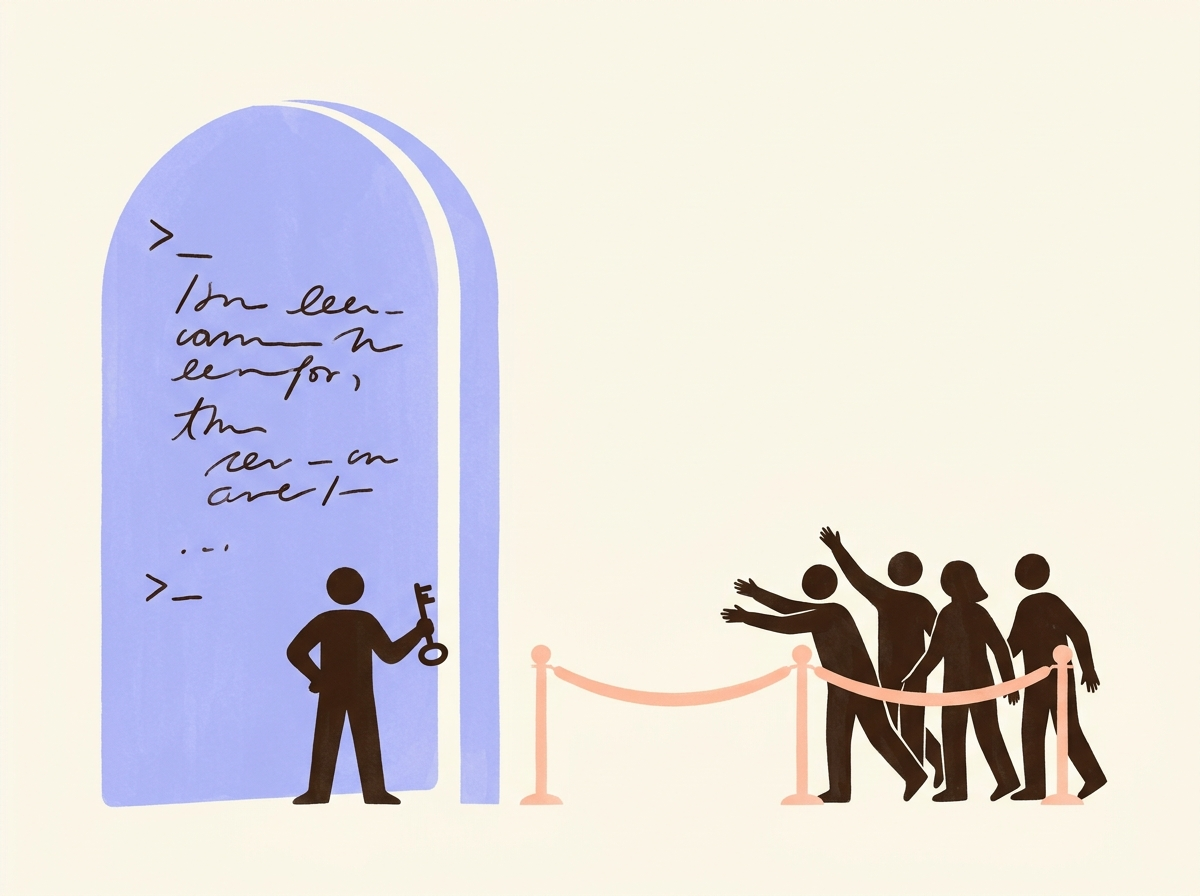
The best AI tools today can already do complex work: clone a web page, write the content for it, publish it, add it to the menu, then find your existing blog posts and link the new page into them. That one workflow saves days.
It also requires a command line. Type the wrong thing and nothing happens, or worse, something does. That’s fine for a developer. It rules out almost every business that isn’t one, and that’s most businesses.
Think about who actually needs this: a marketing team updating a WordPress site every week, a sales rep who needs a new one-pager for a prospect by Friday, anyone trying to publish a blog post with real illustrations instead of a wall of text. The tooling exists. It has just never been built for them.
IntoChat puts that same tooling in the cloud, in a chat, so using it doesn’t require installing anything or learning a terminal.
Software that makes you go find the answer

A lot of the systems businesses run on are decades old. Salesforce, SAP, and tools like them do their job, but using them means opening a link, finding the right record, and filling in the right fields, or running search after search to track down one fact.
Take a construction company chasing a new project. Before they can create an opportunity, someone needs to find the architect, the contractor, the investor, the engineer, all the contacts tied to that job. Those names are usually scattered across different systems, or sitting on the open internet. A model like Claude or ChatGPT can already find that information with no special tooling. What it can’t do today is put it straight into a Salesforce record.
We’re changing that. Ask a question and get an answer pulled from your own systems, or have IntoChat create the record for you. Picture a sales rep on the road who asks, out loud, what a client’s last order included. If that order is in Salesforce, IntoChat answers it. No login, no search, no opening the app.
We’re early. If any of these three problems sound like yours, tell us the use case and we’ll set up a demo.